The electronic medicines compendium (emc) is the UK’s most trusted and comprehensive source of medicines information, serving healthcare professionals and patients with up-to-date, regulated, and accessible content. Datapharm, the company behind emc, undertook a significant redesign of the emc website to improve user experience, accessibility, and engagement based on thorough stakeholder workshops and research.
Workshop
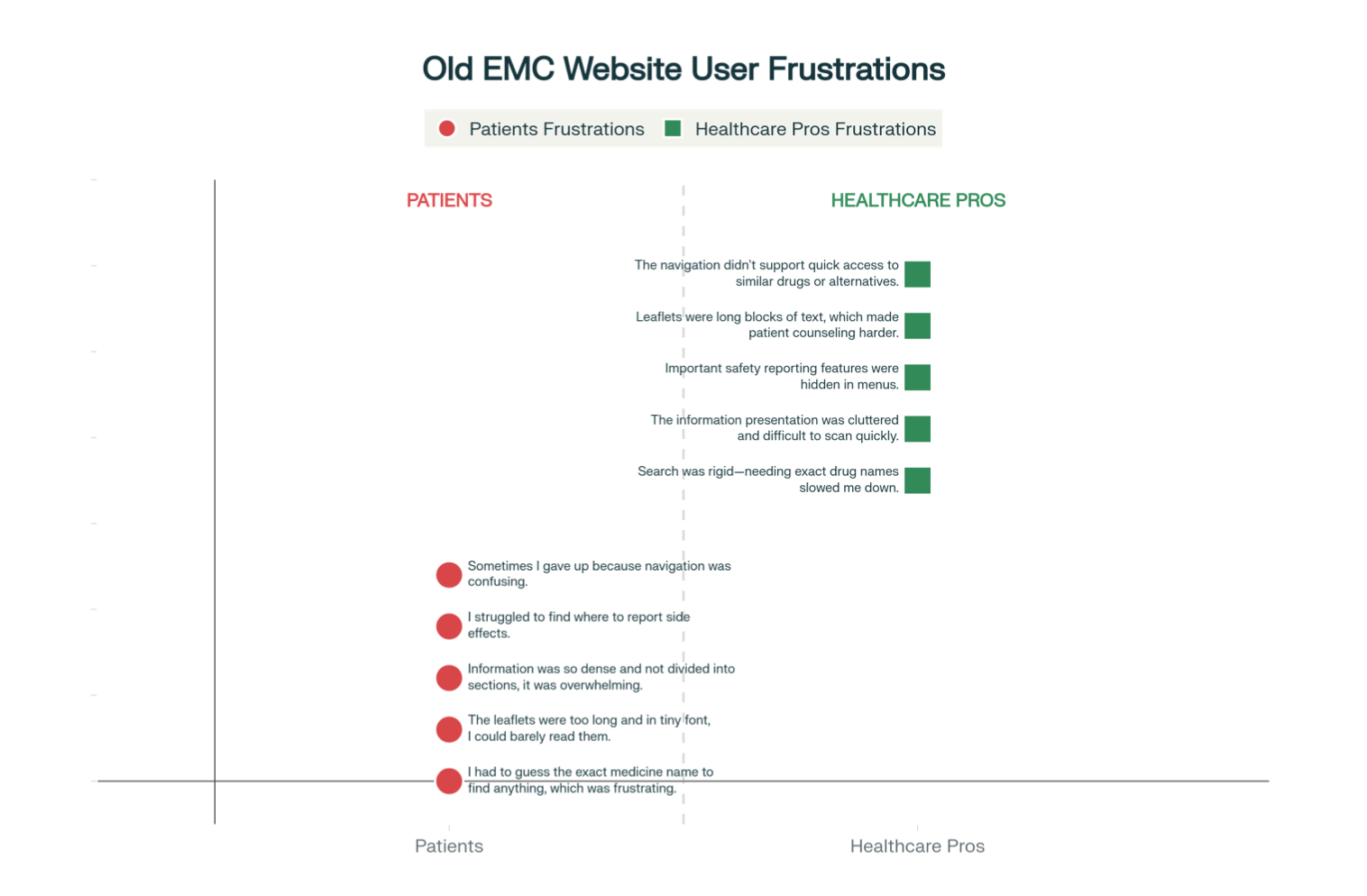
The redesign process began with an intensive five-day workshop involving a diverse group of client’s stakeholders, researchers, UX specialists, and product owners. This workshop also included In-Depth Interviews (IDI) with real customers—healthcare professionals and patients—gathering authentic feedback and uncovering user pains, needs, and motivations directly from the source.
Key activities of the workshop included:
Defining detailed user personas representing doctors, patients, and other key groups.
Mapping the pains and gains faced by each persona in accessing medicine information.
Creating customer journey map to visualize typical user interactions and identify friction points.
Validating redesign concepts through user testing scenarios and real-time feedback during IDI sessions.
Insights from Workshop&Final Designs
A major insight from the research and IDI tests was the patient need for professional, trustworthy, and easily understandable medicine information. Patients wanted plain-language content that could demystify medical terms and empower them in their own care.
Healthcare professionals, meanwhile, prioritized rapid, accurate access to detailed medicine data essential for safe prescribing and regulatory compliance.
Both patients and healthcare professionals also expressed a need for clear navigation and easy access to critical safety functions, particularly the ability to report side effects quickly.
Dedicated Messaging for Personas
Content was tailored to distinct patient and healthcare professional personas, with dedicated messaging and navigational flows delivering appropriately detailed content for each user group.
Easy-to-Understand Content for Patients
Patient-facing information was rewritten in clear, accessible language and reinforced with accessible formats such as large print, Braille, and audio for inclusivity.
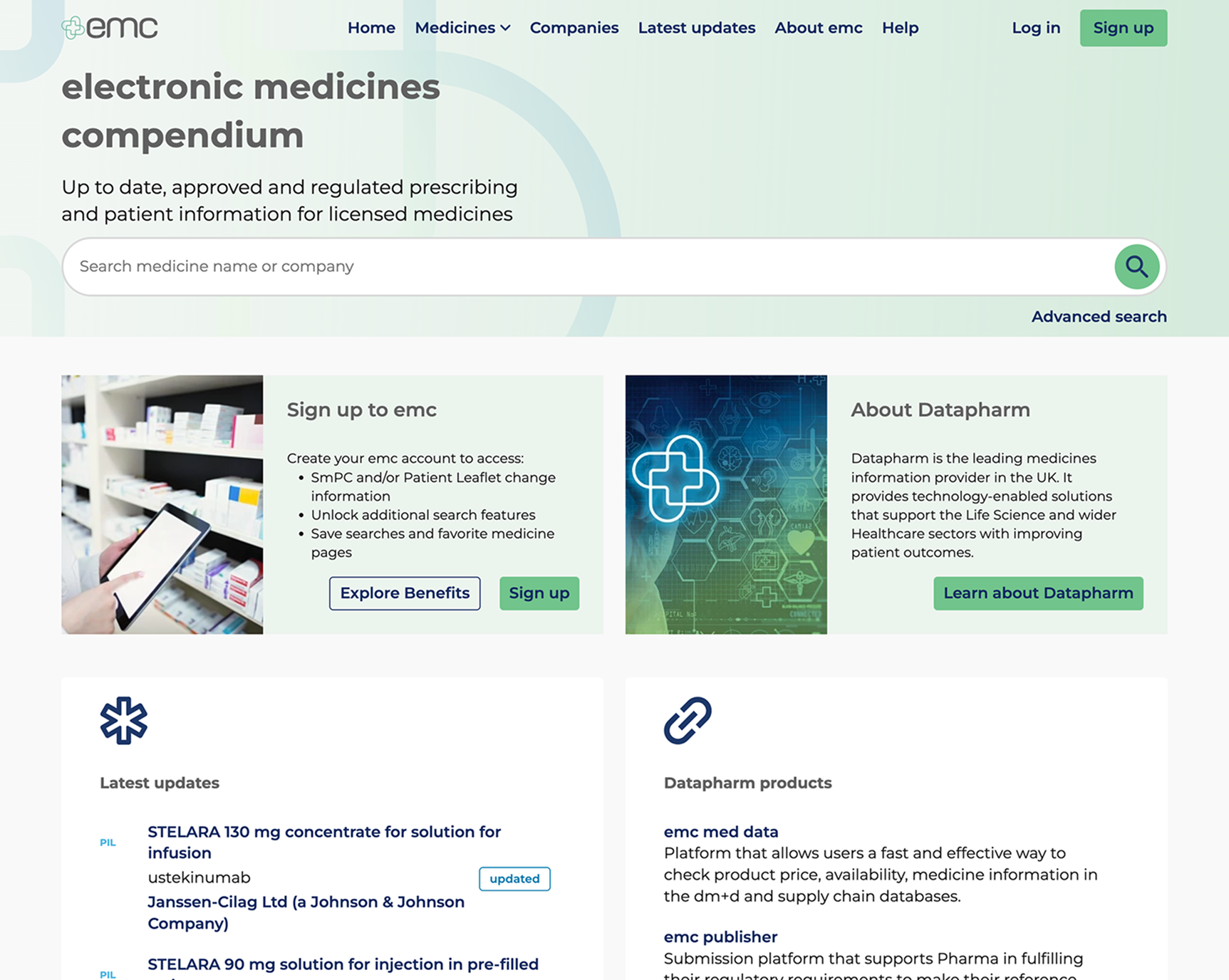
More Prominent Search
Previously, emc's search functionality was limiting and cumbersome, requiring users to enter the exact medicine name to find relevant information.
As spotted during user testing “search” functionality was really important for the users. The redesign addressed this by making the search bar highly visible and accessible, persistently positioned at the top of every page.
Enhanced autocomplete and flexible search features now let users succeed without knowing exact terms, improving speed and ease.
Additional Enhancements
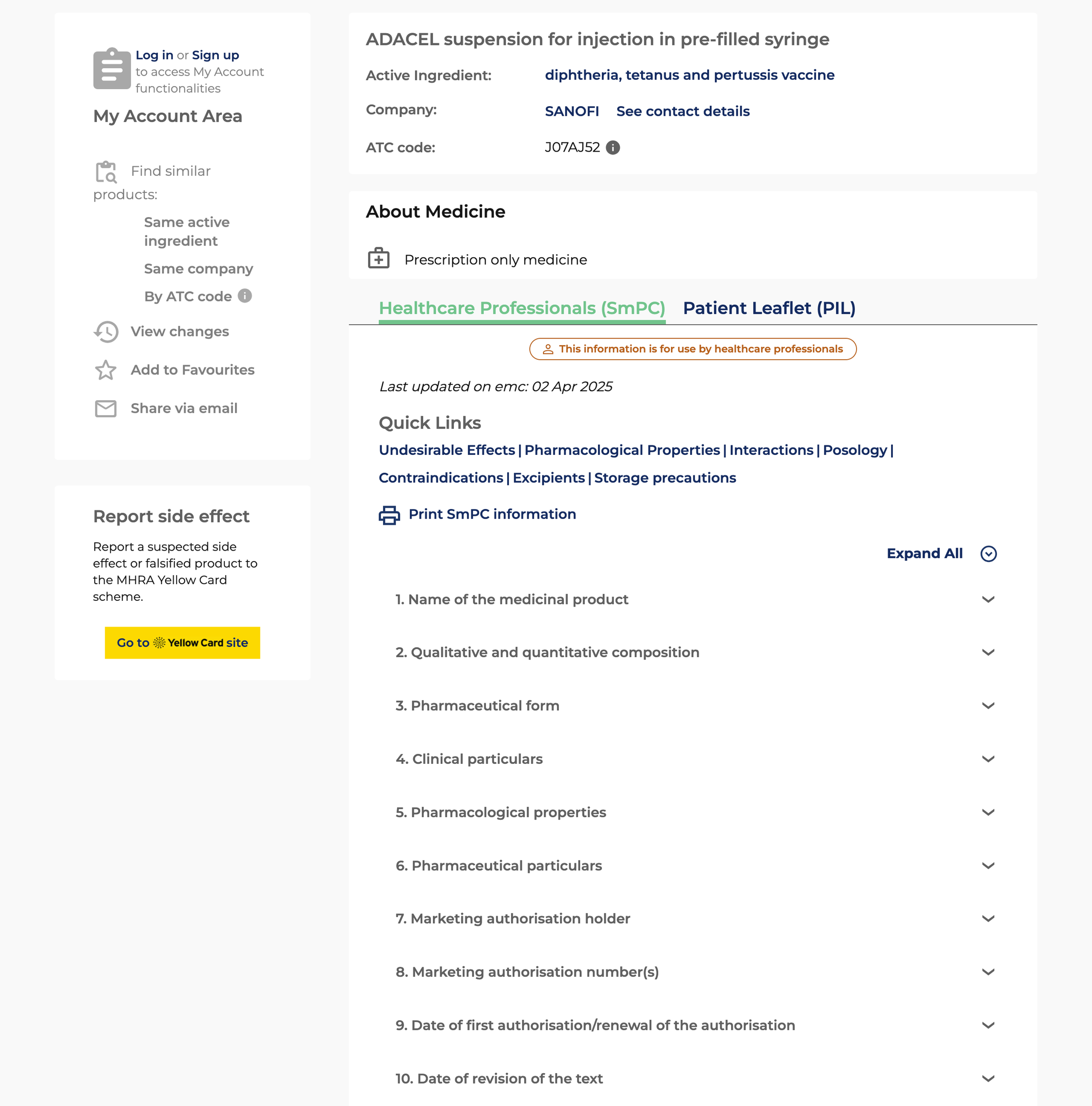
Streamlined interface with quick links to frequently accessed content.
Improved search engine visibility supporting wider user access.
Accessibility features like dark mode for user comfort.
Future-proofed design for interoperable healthcare IT integration.
Improved Information Organization
The redesign segmented content into expandable dropdown sections that were initially collapsed, reducing cognitive load and making medicine information easier to scan and digest for both patients and professionals.
Enhanced Left Side Column Usability
The left side column was refined to offer clearer navigation and emphasized the "Report Side Effect" feature, which is critical for both patients and healthcare professionals. Providing easy access to side effect reporting supports important patient safety and pharmacovigilance efforts. The section for finding medicines with the same active ingredient was also highlighted, empowering users to identify equivalent treatment options, aiding clinical decision-making, and improving patient knowledge.
The Result
The Result
https://www.medicines.org.uk/emc
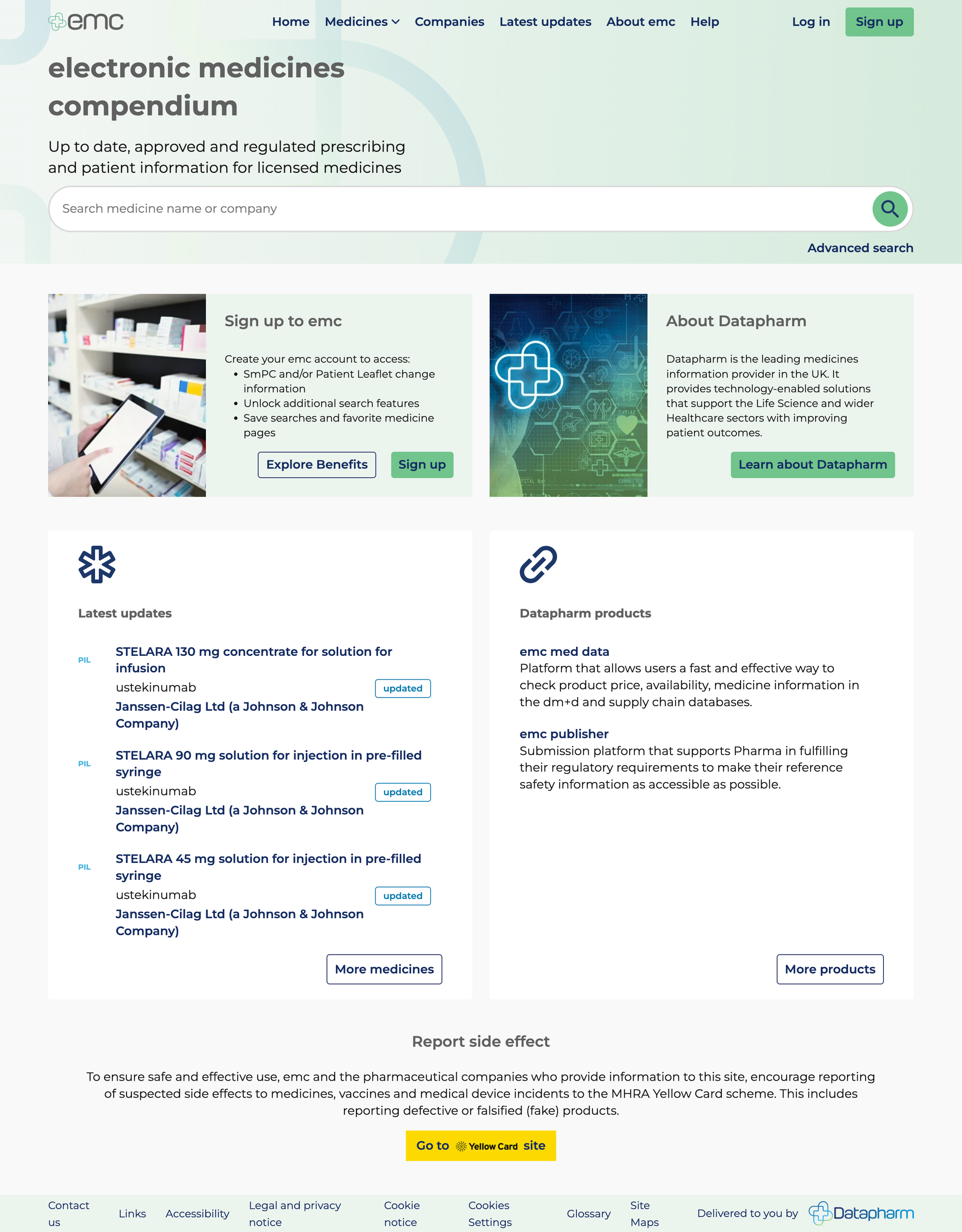
This redesign demonstrates Datapharm’s commitment to improving access, effectiveness, and quality in medicine data delivery. The combined insights from extensive user research, stakeholder collaboration, and iterative testing accelerated the platform’s evolution to a more user-friendly, trusted, and impactful resource, facilitating informed prescribing, enhanced patient outcomes, and regulatory compliance.